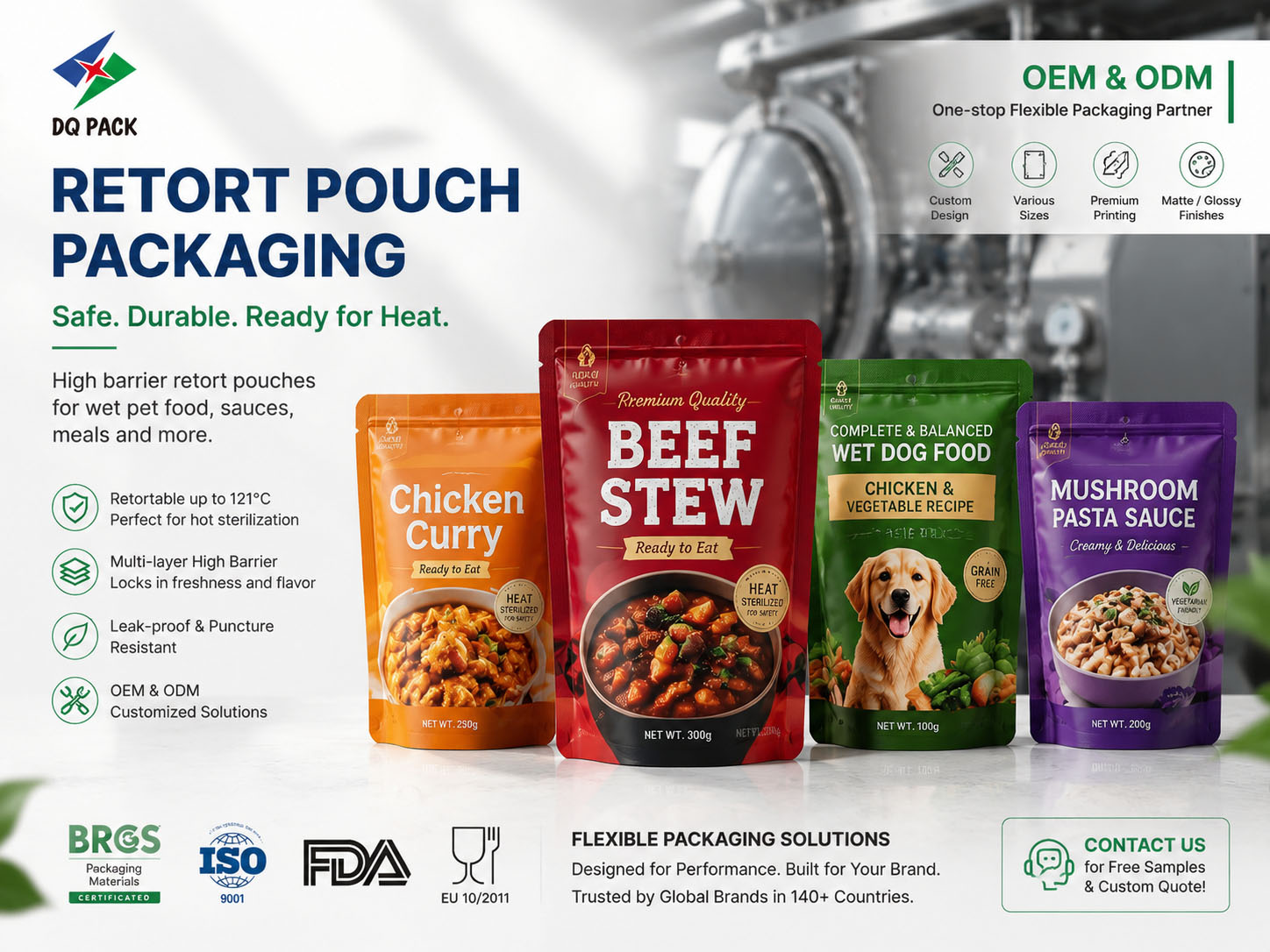
CHAOZHOU, GUANGDONG, CHINA, September 22, 2026 /EINPresswire.com/ — Commercial food processors actively transition from rigid metal cans to flexible retort pouches to optimize efficiency and satisfy evolving consumer expectations. While cylindrical metal cans represent legacy food preservation, modern flexible barrier pouches deliver equivalent sterility with superior logistical economics. Adopting a flexible retort pouch for canned food replacement directly from an established factory reduces freight weight, accelerates autoclave cycles, and enhances retail branding. Guangdong Danqing Printing Co., Ltd. (DQ PACK) specializes in engineering high-barrier retort pouches tailored for braised meats, seafood, and specialty sauces. These specialized flexible packages deliver extended ambient shelf life and enhance consumer convenience across international food markets.
With roots dating to 1991, technical specialists at DQ PACK analyze flexible pouches versus rigid metal cans across four critical dimensions. Food processing engineers systematically evaluate thermal heat transfer rates, warehousing cube utilization, multi-layer barrier chemistry, and consumer opening ergonomics. Assessing these functional factors upfront allows commercial food processors to validate equipment compatibility and capture measurable operational gains. This disciplined technical evaluation guides brand owners through a smooth transition toward modern flexible packaging formats.
Thermal Processing Dynamics: Accelerated Heat Transfer and Nutrient Preservation
Thermal sterilization inside pressurized industrial autoclaves requires heat to penetrate to the geometric center of the food container. Traditional cylindrical metal cans possess a thick cross-sectional profile that requires prolonged thermal exposure to achieve commercial sterility. In contrast, flexible retort pouches feature a slim, flat geometry that shortens the distance heat must travel. This slender cross-section accelerates thermal conduction, reducing total retort cooking times by thirty to forty percent inside 121 degrees Celsius autoclaves. Shorter thermal processing cycles yield substantial energy savings and increase total batch throughput in commercial processing facilities.
Reduced thermal exposure directly enhances the sensory quality and nutritional integrity of the packaged food product. Prolonged retort heating in metal cans often leads to overcooked surface layers and degradation of heat-sensitive vitamins. The rapid thermal transfer of flexible pouches preserves natural vegetable firmness, delicate proteins, and authentic culinary aromas in braised beef dishes. Food brands deliver gourmet-quality prepared meals that retain their original vibrant coloration and appealing texture. This superior taste profile generates high consumer satisfaction and repeat retail purchases.
Logistics and Storage Efficiency: Tare Weight Reduction and Cube Optimization
The economic contrast between rigid metal cans and flexible pouches becomes immediately evident in inbound transport and warehouse storage. Empty cylindrical metal cans consume identical storage volume before filling as they do after processing, occupying massive warehouse space. Unfilled flexible retort pouches arrive flat on compact pallets, requiring up to eighty-five percent less storage space in processing plants. A single standard ocean freight container transports millions of flat pouches, compared to only a fraction of that quantity in empty metal cans, freeing valuable manufacturing floor space and drastically reducing inbound freight expenditures.
Outbound logistics efficiency is equally enhanced through substantial tare weight reductions across commercial distribution networks. In high-volume categories such as wet pet food and prepared meals, flexible multi-layer retort pouches reduce packaging tare weight by over eighty percent compared to traditional three-piece tin cans. The pliable laminate structure eliminates transit denting and cosmetic rim damage that frequently cause retail rejections in canned goods. Food processors pack more edible payload per pallet, maximizing container payload limits and lowering transportation fuel expenditures across multinational supply chains.
Barrier Science and Ambient Shelf Life: 24-Month Preservation Without Metallic Aftertaste
Achieving extended ambient shelf stability without chemical preservatives or cold-chain logistics requires verified commercial sterility and superior barrier performance. DQ PACK constructs high-barrier retort laminates combining bi-axially oriented polyester, pure aluminum foil, high-tensile nylon, and cast polypropylene engineered to withstand 121 degrees Celsius high-temperature cooking sterilization. The embedded aluminum foil layer provides a robust hermetic shield that fully blocks light transmission, oxygen ingress, and moisture permeation, matching the microbial shelf stability of metal cans while preventing seal delamination under autoclave pressure.
A major sensory advantage of flexible barrier laminates is the complete preservation of delicate culinary flavor nuances. Acidic sauces stored in metal containers can occasionally experience subtle metallic flavor leaching over extended storage. In contrast, the food-contact cast polypropylene inner sealant remains entirely non-reactive with acidic, oily, and protein-rich foods. This inert polymer barrier ensures that savory broths, purees, and ready-to-eat entrees retain their natural aroma profile and freshness across global climate zones.
Consumer Ergonomics: Easy-Open Accessibility and Safe Kitchen Handling
Modern consumer preferences increasingly prioritize convenience, injury prevention, and portion control during everyday meal preparation. Traditional metal cans require mechanical can openers that leave razor-sharp edges around container rims, posing cut risks during handling. DQ PACK integrates precision laser scoring and mechanical tear notches that enable clean, utensil-free opening with simple finger pull force, ensuring safe handling for family kitchens and infant food preparation.
Beyond single-serve opening safety, flexible retort architectures accommodate versatile reclosable mechanisms:
Resealable Zipper Integration: Selected retort stand-up pouches incorporate specialized heat-resistant zipper closures, allowing consumers to reseal remaining portions without transferring food into secondary storage containers.
Ergonomic Spout and Cap Assemblies: For purees, fruit pastes, and liquid condiments, optional top or lateral spouts with child-safe caps support mess-free, on-the-go squeeze consumption and reliable resealing.
Post-Use Waste Reduction: Flexible pouches collapse flat after consumption, occupying minimal volume in municipal waste streams compared to bulky discarded metal cans.
Turnkey Can-to-Pouch Transition Engineering and OEM Customization
Transitioning from rigid metal cans to flexible retort pouches requires structured engineering support across graphic design, material formulation, and autoclave validation. DQ PACK provides complete OEM customization for global canned meat, soup, and prepared meal brands. Packaging engineers adapt existing metal can label artwork for high-definition rotogravure printing, achieving 98 percent color matching. Custom barrier structures combining PET, aluminum foil, nylon, and cast polypropylene ensure 24 months of ambient shelf stability without metallic flavors. Technical teams assist food processors in calibrating filling line nozzles, heat-sealing parameters, and autoclave overpressure curves.
Manufacturing operates within an expansive 35,000 square meter facility housing 60 high-speed production machines under ISO 9001:2015 and BRCGS food safety certification. Dedicated in-house testing laboratories and LUSTER vision inspection validate seal integrity, burst pressure, and thermal tolerance up to 125 degrees Celsius. Holding Authorized Economic Operator (AEO) status, the enterprise coordinates synchronized ocean logistics for international brand partners across more than 140 countries. Direct factory engineering delivers stable commercial pricing, compressed conversion timelines, and dependable multi-year container shipments.
Conclusion and Commercial Transition Guide
Transitioning from metal cans to flexible retort pouches enables food processors to reduce freight costs and preserve authentic food taste. These lightweight formats satisfy modern consumer demands for convenient, safe kitchen opening. Supported by a 35,000 square meter facility and 60 advanced production machines, DQ PACK delivers dependable volume supply. Technical teams provide turnkey can-to-pouch conversion support under BRCGS food safety certification. The enterprise delivers custom high-barrier laminates, precision gravure printing, and verified autoclave performance for commercial food brands worldwide.
To download technical retort pouch specifications, request free physical test samples, or discuss custom can-replacement tooling, visit the official enterprise portal: https://www.dqpack.com/. For direct packaging engineering consultations and commercial wholesale quotations, contact the global sales division.
GUANGDONG DANQING PRINTING CO.,LTD
GUANGDONG DANQING PRINTING CO.,LTD
+ +86 18125839585
email us here
Visit us on social media:
Facebook
YouTube
Legal Disclaimer:
EIN Presswire provides this news content “as is” without warranty of any kind. We do not accept any responsibility or liability
for the accuracy, content, images, videos, licenses, completeness, legality, or reliability of the information contained in this
article. If you have any complaints or copyright issues related to this article, kindly contact the author above.

Media gallery