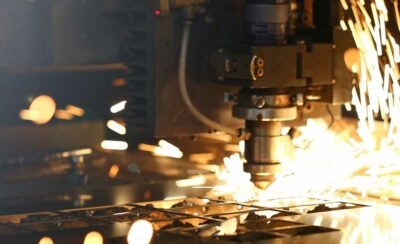
Integrated manufacturing solutions help large tonnage contract molders deliver consistent quality, efficiency, and scalable production.
CLEVELAND HEIGHTS, OH, UNITED STATES, June 12, 2026 /EINPresswire.com/ — Industrial manufacturing continues to move toward production models that connect design, tooling, fabrication, inspection, and delivery in one organized flow. In that setting, a large tonnage contract molder manufacturer plays an important role in supporting repeatable output for larger or more demanding part programs.
Across industrial markets, demand is increasing for coordinated manufacturing systems that can manage large-scale production while maintaining quality stability. This trend is closely connected to projects that require precise tooling, controlled production environments, and dependable delivery timelines. It also reflects the growing importance of working with a contract manufacturing company in Ohio that can manage multiple stages of production without fragmentation or delays.
Dalton Manufacturing and Consulting Group describes its work as a contract manufacturing operation that includes parts manufacturing, plastic molding, metal fabrication, carbon fiber molding, and parts design. The work is structured around a connected flow that begins with understanding product requirements and continues through engineering, tooling, production, and quality checks. That type of setup is central to the growth of contract manufacturing services in industrial markets.
Contract manufacturing demand continues to rise
Contract manufacturing is increasingly used by businesses that want to scale production without taking on every part of the process internally. The model supports product development, tooling, fabrication, and output in one workflow. That structure matters in industrial production because a design change, a tooling issue, or a quality concern can affect the entire run if the process is not coordinated well.
A contract manufacturing company in Ohio can support both early-stage development and ongoing production. The public materials connected to Dalton Manufacturing and Consulting Group describe support for prototype molds, production molds, molds for castings, machining operations, assembly operations, packaging, overseas shipping coordination, and part design consulting for production optimization. That range of services reflects a model built to handle the full production cycle rather than only one step.
The approach is also relevant to buyers working on projects that need a consistent supply of parts over time. Industrial programs often begin with a design requirement and move toward tooling and volume manufacturing once the product is approved. That transition becomes easier when the work is handled within a connected process rather than by multiple disconnected vendors.
Tooling and prototyping remain central to production readiness
Tooling plays a foundational role in manufacturing operations. It defines the shape, structure, and repeatability of produced components. Within a contract manufacturing company in Ohio, tooling development is integrated into the broader production workflow to ensure alignment between design intent and final output.
Prototype tooling is also part of the process. Before full production begins, prototypes can be created to test the design and confirm how the part will perform. That stage helps reduce risk because it gives engineers and production teams a way to review the part before it is made at scale. Once a design is approved, production tooling can be used to support larger quantities.
The difference between a few test runs and high-volume production is important in industrial markets. Some molds are intended for limited batches, while others are built for much higher output. A large tonnage contract molder manufacturer has to support both sides of that production range. That means the tooling must be suited to the amount of pressure, cycle time, and part consistency that the project requires.
Plastic molding supports high-volume output
Plastic injection molding is one of the core production methods used in this type of manufacturing system. It is described as an efficient way to create large quantities of parts with consistent shape and repeatable quality. The process involves heating plastic pellets, injecting the material into a mold, cooling it, and removing the finished part.
This type of production is especially useful when a project requires a large number of parts. It can support steady output and reduce labor needs when the process is properly set up.
For that reason, contract manufacturing services often rely on plastic molding as one of the most scalable methods in the production mix.
The public materials also note that minimum order quantities can apply, which is typical for production systems built for industrial volume rather than one-off items. That detail reflects the operational nature of a large tonnage contract molder manufacturer. The focus is on repeatable production programs, not individual replacement parts sold one at a time.
Engineering and design support improve manufacturability
Engineering input plays a critical role in ensuring manufacturability. Product designs must be aligned with production capabilities to avoid inefficiencies during tooling or manufacturing. Within a contract manufacturing company in Ohio, engineering review is typically integrated into early project stages.
The materials connected to Dalton Manufacturing and Consulting Group describe a process that begins with understanding product requirements and continues through conversion into production-ready engineering plans. That process is important because an early design choice can affect the cost, timing, and quality of the finished part.
The value of this type of support is simple. A design that is built for manufacturing is easier to tool, easier to produce, and easier to inspect. That reduces the chance of costly revisions once production has already started. It also helps keep the project moving in a controlled way from concept to delivery.
Quality control remains a core requirement
Quality control is part of the production model from the beginning, not only at the end. The public materials describe ISO 9001-certified quality management, along with inspection, material certification, third-party checks, polymer analysis, and testing. These steps help verify that the part meets the required dimensions and performance needs.
In industrial work, quality control is critical because even small deviations can create problems in fit, function, or long-term use. A strong production system needs checks at each stage so that issues can be found early. That is especially important for high-volume programs, where an error repeated across many parts can affect cost and delivery.
Tooling quality is also part of that process. If the mold is not aligned with the final requirement, the output will not stay consistent. That is why the combination of tooling discipline and inspection is such a central feature of contract manufacturing services.
Supply coordination supports larger programs
A coordinated supply network is another reason industrial buyers continue to rely on contract manufacturing companies in Ohio models. The materials connected to Dalton Manufacturing and Consulting Group describe relationships with domestic and international suppliers, manufacturing facilities, and engineering teams. That kind of network helps support production timing, material access, and shipping coordination.
For large or complex projects, supply coordination can be as important as the manufacturing step itself. A project may require specific materials, specialized tooling, or support from multiple facilities. When those pieces are managed in one system, the result is a smoother production flow and better control over the final output.
The same model also supports overseas shipping coordination and end-to-end production planning. That gives industrial buyers a way to manage both domestic and international work through one production framework.
Applications across industrial sectors
The production model is used across several sectors, including industrial, medical, and consumer products. The same structure also supports seating components, conveyor belt sprockets, plastic molding, metal fabrication, carbon fiber molding, and design support.
That range matters because many industrial projects involve more than one part type or one material category. Some programs need molded plastic components. Others need fabricated metal parts. Others may require a combination of engineering support, prototyping, and volume manufacturing. A large tonnage contract molder manufacturer can support those needs when the process is built around controlled production and repeatable output.
About Dalton Manufacturing and Consulting Group
Dalton Manufacturing and Consulting Group has served customers since 1998 and describes its work as parts manufacturing on a contract basis. Public materials say the operation includes prototype molds, production molds, molds for castings, machining operations, assembly operations, packaging, overseas shipping coordination, and part design consulting for production optimization. The business is located at 2424 Lamberton Road in Cleveland Heights, Ohio, and works through a network of manufacturing facilities, raw material suppliers, and engineering teams, operating as part of broader contract manufacturing services for industrial production needs.
Mac Dalton
Dalton Manufacturing and Consulting Group
+1 (216) 570-5250
email us here
Visit us on social media:
LinkedIn
Facebook
Other
Legal Disclaimer:
EIN Presswire provides this news content “as is” without warranty of any kind. We do not accept any responsibility or liability
for the accuracy, content, images, videos, licenses, completeness, legality, or reliability of the information contained in this
article. If you have any complaints or copyright issues related to this article, kindly contact the author above.

Media gallery